
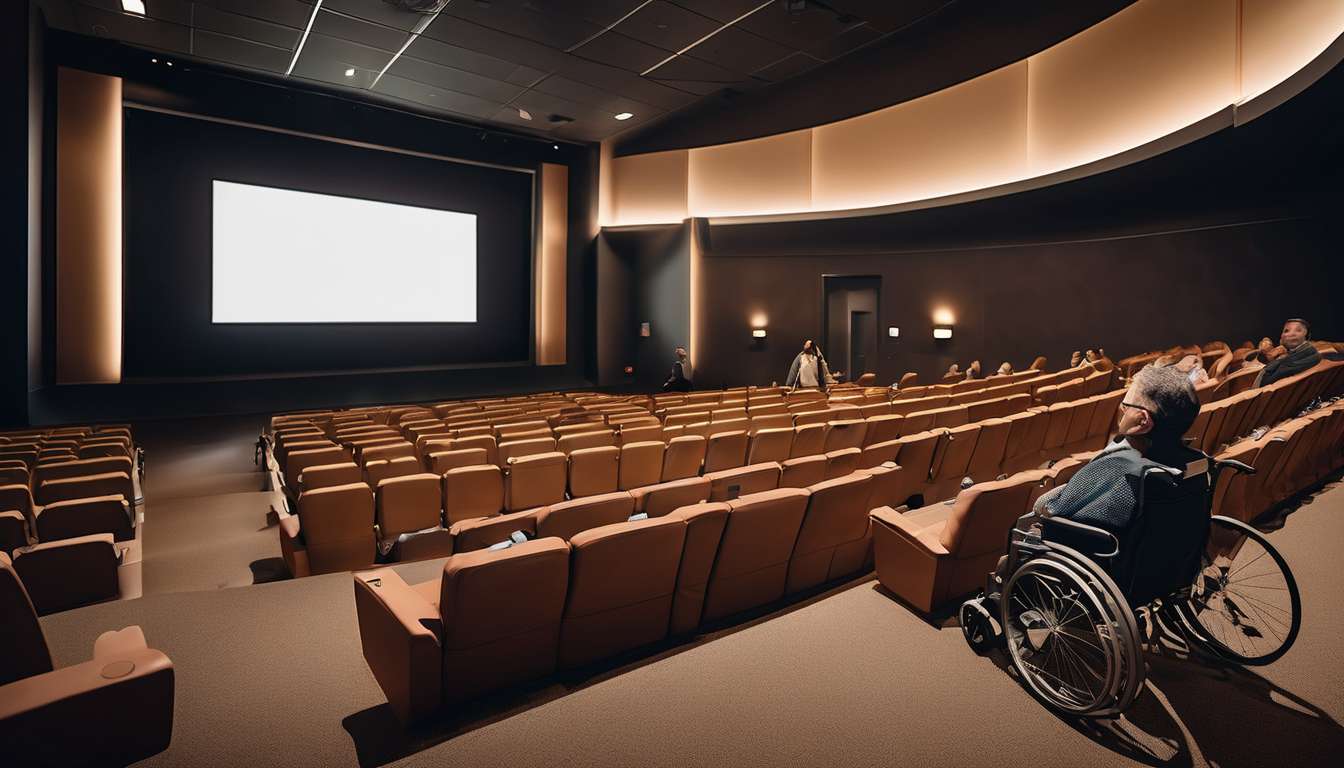
Neighboring seats in the theater remained empty until we asked a man with a cane if he’d like to sit with us.
His face lit up when he discovered the assistive listening devices and clear sightlines we’d helped arrange. That moment crystallized why accessibility planning transforms more than logistics; it reshapes experiences and expectations for adults seeking cinema comfort and dignity.
As practitioners and advocates, we’ve learned to look beyond ramps and captions.
- Consider scent sensitivity.
- Consider seat height.
- Consider lighting control.
- Consider respectful staffing training.
That single interaction prompted us to reevaluate how venues communicate services.
- How booking systems present options.
- How marketing reaches diverse audiences.
In this article, we share practical steps and real‑world lessons that improve viewing services for adults with mobility, sensory, or cognitive needs.
These are actions that increase attendance, satisfaction, and inclusivity while honoring patrons’ autonomy and privacy.
Assess Venue Accessibility
Entrance, seating, restrooms, lighting, and signage survey
We’ll start by surveying the venue’s entrances, seating, restrooms, lighting, and signage to identify barriers that could hinder patrons with disabilities.
Walk-through inspection of routes and clearances
We walk the space together, noting step-free routes, ramp slopes, door widths, and clear paths from drop-off to lobby so everyone feels welcome.
Signage and lighting checks
We check that signage uses high-contrast text and braille, and that lighting levels avoid glare while supporting safe navigation.
Restroom accessibility
We inspect restroom layouts and fixtures for maneuvering room and grab bars, and confirm fixtures meet accessible clearances.
Inclusive seating
We confirm that inclusive seating options let groups sit together without forcing separation and that wheelchair spaces, companion seats, and sightlines are adequate.
Assistive-technology evaluation
We evaluate assistive technologies—hearing loops, captioning displays, and audio description systems—to ensure they’re:
- installed correctly,
- clearly labeled,
- easy to request.
Staff training and troubleshooting
We also verify that staff know how to activate and troubleshoot these tools.
Overall goal
Our goal is an accessible cinema where patrons with varied needs can attend confidently, connect with others, and participate fully in film experiences without unnecessary barriers.
Improve Booking Clarity
We’ll make booking information crystal clear by listing accessibility features, seating options, and how to request accommodations right on the ticket page.
- Show which screenings are labeled accessible cinema.
- Note available assistive technologies (e.g., hearing loops, captioning devices).
- Mark inclusive seating areas reserved for mobility devices and companions.
We won’t bury this info in FAQs; we’ll display it alongside showtimes, prices, and seat maps so everyone can choose confidently.
- Place accessibility details on the same page as showtimes and pricing.
- Integrate icons and brief text next to each screening and seat selection.
We’ll use plain, welcoming language that affirms visitors belong here and offer short examples.
- Example copy: "This screening includes open captions."
- Keep descriptions concise, positive, and non-technical.
We’ll provide an easy form to request specific supports, with clear timelines and confirmation methods.
-
- Include a short request form on the ticket page.
-
- State timelines for requests (e.g., "Request at least 48 hours before showtime").
-
- Confirm requests via email, SMS, or phone.
We’ll explain any additional policies or fees upfront.
- List any costs associated with equipment or companion seating.
- Describe refund or change policies related to accessibility requests.
We’ll provide alternative booking routes for those who can’t use online systems and ensure ticketing labels are compatible with screen readers.
- Offer phone and in-person booking options.
- Ensure all ticket text and labels follow accessible markup and are screen-reader friendly.
By doing this, we’ll reduce anxiety, speed planning, and make attending films a predictable, dignified experience for all.
Train Respectful Staff
Training scope and goals
We’ll train all front-line staff to interact respectfully and confidently with patrons who have disabilities, covering communication, assistance techniques, and privacy.
Key training outcomes:
- Teach clear, person-first language.
- Ask before helping and mirror each patron’s preferred communication style.
- Ensure everyone feels welcomed in our accessible cinema.
Practical skills and exercises
Role-plays and hands-on practice will include offering and using assistive technologies and mobility aids without assuming needs.
- Role-play scenarios for:
- Greeting and communication preferences.
- Offering assistive devices (hearing loops, captioning devices).
- Escorting and seating assistance when requested.
- Hands-on practice with: hearing loops, captioning devices, and basic mobility-aid guidance.
Routines and procedures
Accessibility is not optional — we’ll build routines for discreet ticket checks, escorting patrons when requested, and handling sensitive information with care.
- Standard operating procedures for:
- Discreetly verifying tickets and accommodations.
- Escorting patrons to seats on request.
- Safeguarding and limiting access to sensitive information.
Technical troubleshooting and escalation
Staff will learn to troubleshoot common assistive technologies, coordinate with managers when technical support is needed, and log issues to improve service.
- Troubleshooting steps and escalation flow:
- Basic troubleshooting (power, connections, device pairing).
- When to contact on-site technical staff or management.
- Logging incidents and outcomes for follow-up.
Culture, empathy, and accountability
We’ll emphasize empathy, listening, and consistent follow-through so patrons know we value their comfort and dignity.
- Behavior and culture elements:
- Person-first, respectful language.
- Asking and listening to preferences.
- Follow-through on accommodations and communication.
Ongoing training and quality improvement
By investing in ongoing refreshers and feedback loops, we’ll keep our team confident, connected, and accountable to creating an environment where inclusive seating and other accommodations are reliable and respectful.
- Continuous improvement actions:
- Regular refresher training sessions.
- Collecting and reviewing patron and staff feedback.
- Updating procedures and retraining as needed.
Optimize Seating Options
Seating configurations that balance sightlines, companion spaces, and wheelchair access.
We’ll design multiple seating configurations that balance sightlines, companion spaces, and wheelchair access to ensure every patron can enjoy films comfortably.
Scattered wheelchair platforms to avoid isolation.
We’ll map rows so wheelchair platforms are scattered front, middle, and rear, avoiding isolation and promoting shared viewing.
Inclusive seating features.
- Removable armrests
- Varied seat widths
- Firm transfer surfaces
These features let patrons choose what fits them best.
Reserved companion spots adjacent to accessible seating.
We’ll reserve companion spots next to accessible cinema spaces so friends and partners sit together rather than being separated.
Retrofit priorities: circulation and signage.
When we retrofit auditoriums, we’ll prioritize clear circulation paths and signage at eye level for everyone.
Integrating assistive technologies with seating.
- Hearing device loops
- Captioning displays near accessible seats
- Charging points for personal devices
These technologies should be located or paired with accessible seating.
Consultation and adjustable proportions.
We’ll consult patrons with disabilities during planning to confirm choices and adjust proportions of accessible versus general seating.
Design goals: choice, dignity, and belonging.
By offering choice, dignity, and practical features, we create a welcoming atmosphere where belonging is built into the room’s layout, not added as an afterthought.
Manage Sensory Environments
We will control lighting, sound levels, scent, and visual clutter so patrons with sensory sensitivities can enjoy films without discomfort.
Arrival and seating areas will be predictable and calm.
- Soft, adjustable lighting to reduce glare and sudden changes.
- Clear, simple signage and wayfinding to create confidence and reduce anxiety.
- Designated quiet waiting areas to allow a low-stimulation place before entry.
Auditorium practices will support varying sensory needs without singling anyone out.
- Maintain moderate baseline sound levels.
- Offer quiet or low-stimulation showings alongside regular screenings.
- Provide clearly marked quiet zones or seating options for lower stimulation.
Scent and air quality will be managed to prevent unexpected triggers.
- Remove strong, artificial scents and limit staff fragrances.
- Maintain clean, neutral air to reduce olfactory triggers.
Visual clutter will be minimized to improve navigation and reduce overstimulation.
- Organize concession and queue spaces with clear sightlines.
- Use simple contrast and uncluttered layouts for wayfinding and signage.
Seating and companion needs will be coordinated inclusively.
- Implement seating plans that allow companions to sit together.
- Ensure seating options accommodate varied sensory preferences (e.g., aisle seats, low-stimulation zones).
Staff training will emphasize discreet, supportive responses to sensory distress.
- Train staff to recognize signs of sensory overload and to offer calm, private assistance.
- Encourage communication that fosters trust and belonging.
Assistive technologies will be integrated into sensory planning.
- Coordinate assistive-device use (e.g., personal sound amplifiers, earplugs) with overall sensory strategies so accessibility feels natural and respectful.
Provide Assistive Technologies
We will provide a range of assistive devices and digital supports so patrons with hearing, vision, cognitive, or mobility needs can fully participate in film screenings.
Available devices and supports:
- Captioning devices (personal captioning units or synced mobile captions)
- FM/RF hearing loop systems and personal amplifiers
- Audio description headsets
- Tactile maps and haptic supports
- Clear, easy-to-navigate apps that:
- Reserve seats
- Request devices
- Deliver synchronized descriptions or captions
We make assistive technologies visible and simple to request at ticketing and online, so everyone feels comfortable asking for what they need.
Frontline logistics and dignity-focused policies:
- Staff-trained checkouts for equipment
- Charging stations and secure storage for devices
- Flexible, respectful return policies
- Clear signage and online prompts for requesting supports
Inclusive seating is integrated with device access to ensure comfort and functionality.
Seating features:
- Companion seating with nearby space
- Convenient power outlets where needed
- Placement that preserves sightlines and accessibility to devices
We regularly test devices, solicit feedback from patrons who use them, and update our offerings.
Continuous improvement practices:
- Routine device testing and maintenance
- Ongoing patron feedback collection and analysis
- Periodic updates to hardware, software, and training based on feedback
By centering practical, respectful supports, we create a movie-going environment where people belong, engage, and enjoy films together.
Communicate Privacy Policies
What personal data we collect
We collect contact details and information needed to support accommodations, such as accessibility preferences and seating needs.
How we use the data
We use this information to provide consistent, appropriate support and to fulfill accommodation requests (for example, arranging inclusive seating or configuring assistive technologies).
Who can access the data
Only a limited number of trained staff members can view accommodation-related information. Access is restricted to those who require it to deliver services.
Sharing and sensitive information
We will never share sensitive accommodation details with third parties without your explicit permission. Any sharing for operational purposes will be limited and only with consent.
Consent and control
We provide clear consent choices for storing preferences. You can opt in or opt out of having your accommodation preferences retained.
Updating or deleting your information
To update or erase your data, follow one of these simple options:
- Call our accessible phone line.
- Email our privacy contact.
- Use our accessible online form.
We will respond to update or deletion requests promptly and helpfully.
Data security and retention
We implement appropriate security measures to protect personal and accommodation data. We retain information only as long as necessary to provide consistent support and to comply with legal obligations, then securely delete or anonymize it.
Accessibility and trust
We present this policy in plain language and offer translated and audio versions so everyone can understand it. We welcome feedback on the policy and on how we handle privacy to ensure trust and continuous improvement.
Measure Attendance Outcomes
We’ll track attendance patterns and accommodation usage to evaluate whether our accessibility measures are increasing participation and improving the movie-going experience.
We’ll collect anonymized data on ticket sales, repeat visits, and use of assistive technologies so we can see who’s coming and what supports they use.
We’ll note bookings for inclusive seating, audio description, captioned screenings, and other requests, and compare them to overall attendance to measure reach.
We’ll survey attendees about feeling welcomed and whether accommodations met needs, using short, respectful questions that invite honest feedback.
We’ll review patterns monthly, looking for barriers like low uptake or clustered complaints, and we’ll adjust scheduling, marketing, or staff training accordingly.
We’ll share summaries with stakeholders and community members so everyone sees progress and gaps.
By measuring outcomes transparently and responding collaboratively, we’ll strengthen our accessible cinema offering, build trust, and ensure our venue remains a place where adults of all abilities feel they belong and can enjoy films confidently.
How can attendees with cognitive disabilities be supported in understanding movie content and schedules beyond visual aids and simplified signage?
Goal: Help attendees with cognitive disabilities understand movie content and schedules beyond visual aids and simplified signage.
Provide plain-language summaries and easy-read materials.
- Write short, clear summaries of movie plots in plain language.
- Create easy-read handouts with big text, simple sentences, and supportive images.
- Include content warnings (e.g., loud noises, flashing lights, intense scenes) in the same easy-read format.
Offer audio descriptions and alternative formats.
- Provide audio-description tracks that explain visual action, settings, and nonverbal cues.
- Make summaries and schedules available in multiple formats (audio files, large-print PDFs, braille on request).
Use familiar symbols, color-coding, and consistent layout.
- Adopt a small set of familiar symbols (e.g., clock for schedule, bell for start) and use them consistently.
- Use a clear color-code for session types or locations, with high-contrast combinations.
- Keep layouts predictable so attendees can quickly find time, location, and accessibility info.
Share schedules and content information in advance.
- Send schedules and movie summaries by email and through event apps well before the event.
- Offer printable and downloadable versions so attendees and caregivers can prepare.
Train staff in patient, consistent communication.
- Teach staff to use short sentences, restate key points, and check understanding.
- Encourage staff to offer one-on-one explanations when needed and to use the agreed symbols and color cues.
- Train staff on how to describe sensory aspects and content warnings clearly and calmly.
Offer quiet orientation sessions and social stories.
- Run small, quiet orientation sessions before screenings to explain the space, routine, and what to expect.
- Create social stories that describe arrival, seating, expected behavior, and how to get help.
- Provide opportunities for attendees to visit the venue in advance where possible.
Make it easy to ask for help and adjustments.
- Publicize a clear point of contact (desk, phone number, or app) for accessibility requests.
- Allow flexible seating, early entry, or a quiet room for people who need breaks.
- Consider buddy systems or volunteers trained to support cognitive accessibility.
Evaluate and iterate.
- Collect feedback from attendees with cognitive disabilities and caregivers.
- Track what worked and what didn’t, then update materials, staff training, and processes accordingly.
What legal requirements or liability considerations should venues be aware of when implementing new accessibility features or charging fees for assistive services?
Summary of legal duties and liability risks for venues adding accessibility features or charging for assistive services
Legal compliance: Venues must comply with disability laws such as the ADA and local equivalents and follow applicable anti‑discrimination rules.
They should ensure physical access, effective communication, and reasonable modifications to policies and practices unless doing so would create an undue burden or fundamental alteration.
Prohibition on discriminatory fees: Venues should avoid imposing extra fees that could be perceived as discriminatory for disability‑related accommodations.
Charging for core accessibility features (e.g., ramps, accessible seating, basic assistive listening systems) may violate laws or create legal risk.
When fees may be acceptable: Fees may be acceptable for optional, private, non‑essential services requested by an individual (for example, a privately contracted personal care attendant or a for‑hire sign language interpreter), provided:
- The service is truly optional and not required for equal access.
- The individual gives informed consent to pay.
- Charging does not effectively deny access to the venue.
Documentation and decision‑making: Venues should document accommodation requests and the reasons for granting, modifying, or denying them.
Good records support compliance and defend against claims of discrimination.
Staff training: Train staff on legal obligations, how to handle accommodation requests, how to avoid asking inappropriate medical questions, and how to document interactions.
Contracts and informed consent for private services: When offering or arranging private assistive services, secure clear informed consent and written agreements defining responsibilities, payment, and liability.
Make clear which services are provided by the venue and which are arranged with third parties.
Risk management—legal counsel and insurance: Consult legal counsel when developing policies or before implementing fee structures that touch on accommodations.
Review insurance coverage (general liability, professional liability, cyber if data is involved) to understand and, where needed, expand coverage for claims related to accessibility or services provided.
Operational best practices (to minimize exposure and promote equity):
- Adopt clear, written accessibility and accommodation policies.
- Offer alternatives when a paid service is proposed (e.g., free in‑house basic options).
- Make pricing and policies transparent and nondiscriminatory.
- Regularly audit facilities and services for accessibility.
- Engage with disability groups for feedback and testing.
Bottom line: Prioritize equitable access and avoid charging for essential accommodations. Document decisions, train staff, consult counsel, and use insurance and clear contracts for optional private services to minimize legal risk and ensure a welcoming environment for everyone.
How can small or independent adult movie theaters with limited budgets prioritize accessibility upgrades for the greatest impact?
Priority upgrades — help the most guests fastest
Clear captions, portable assistive listening devices, and designated wheelchair spaces will be prioritized because they benefit many guests quickly and at relatively low cost.
Staff training and booking accommodations
Train staff in welcoming communication and create simple booking options to note needs so guests can be accommodated proactively.
Funding approach
Seek grants, community partnerships, and crowdfunding to fund larger infrastructure (ramps, hearing loops) over time.
Implementation approach
Pilot low‑cost changes first, collect feedback, and iterate so improvements are informed by guests and staff and everyone feels seen and included.
Conclusion
You’ve taken clear steps to make adult movie viewings accessible and welcoming.
By assessing venues, clarifying booking, training staff, optimizing seating, managing sensory environments, and offering assistive tech, you’ll remove common barriers.
Communicate privacy policies clearly and measure attendance to keep improving.
These actions not only expand access but also show respect and build trust, encouraging more people to participate and ensuring your events are inclusive, comfortable, and sustainable over time.